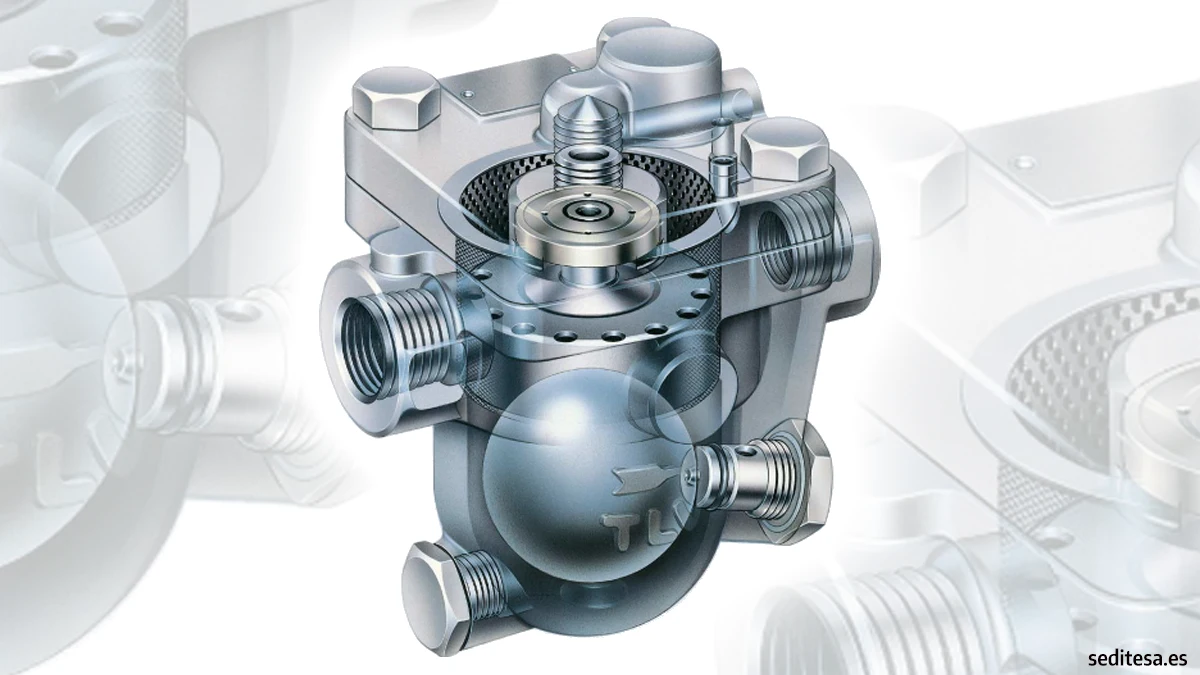
More than fifty years have passed since TLV introduced the closed free float concept to industries using steam circuits. Today, TLV’s Free Float® traps are used in an increasing number of plants worldwide, ensuring maximum performance.
What is the TLV Free Float® Steam Trap?
The failure rate of mechanical steam traps depends on the number of their moving parts. Compared to inverted bucket traps, which have a complex mechanism consisting of the bucket, lever, and its corresponding joint, the TLV Free Float® trap, with only a single moving part, ensures greater reliability and a long service life.
- A high-precision float. A high-quality manufacturing process produces nearly perfect spherical floats. This results in a Free Float® trap with exceptional shut-off efficiency, even with low condensate flow at high pressure and temperature.
- The simpler, the better. The sophisticated simplicity of Free Float® traps reflects TLV’s philosophy that the best solutions are simple.
Advantages of TLV Closed Float® Steam Traps
Process Performance
At Seditesa, we believe that TLV’s Free Float® trap quickly adapts to variations in condensate flow, ensuring fast discharge and maximum process performance. Insensitive to backpressure, the TLV Free Float® trap is ideal for condensate recovery.
Energy Savings
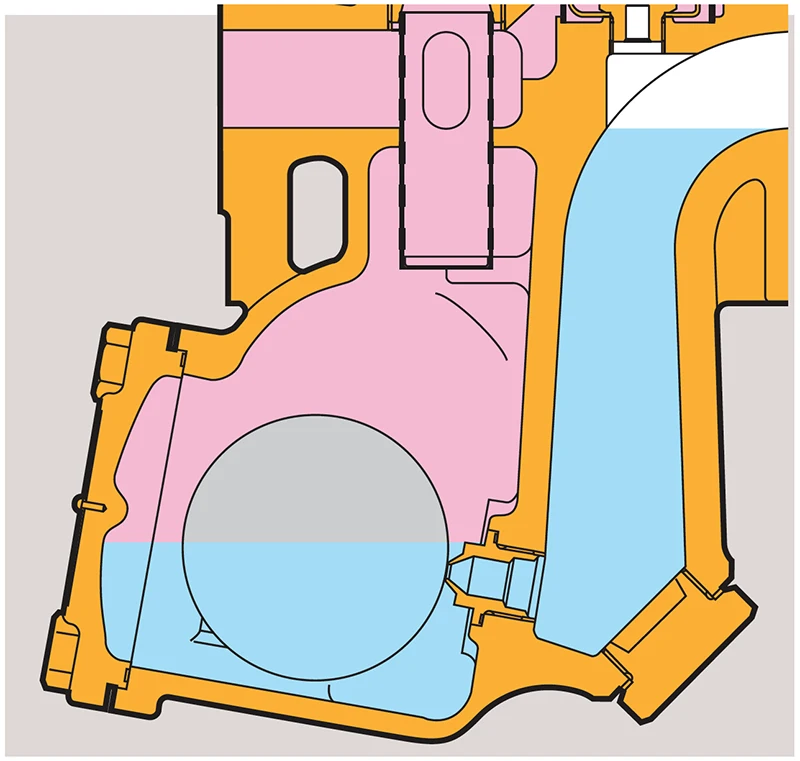
The location of the discharge orifice, which is always beneath a hydraulic seal of the condensate itself, along with the three float support points in some models, prevents steam leakage even at low condensate flows.
Long Service Life
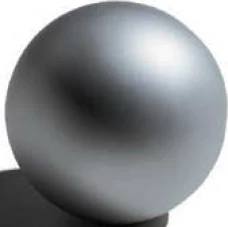
The high-precision float rotates freely, allowing its entire surface to act as a valve and distributing wear evenly. This results in minimal wear, ensuring a long service life.
Built-in Filter in Free Float®
The internal components are protected by an integrated stainless steel mesh filter.
Fast Response in Operation
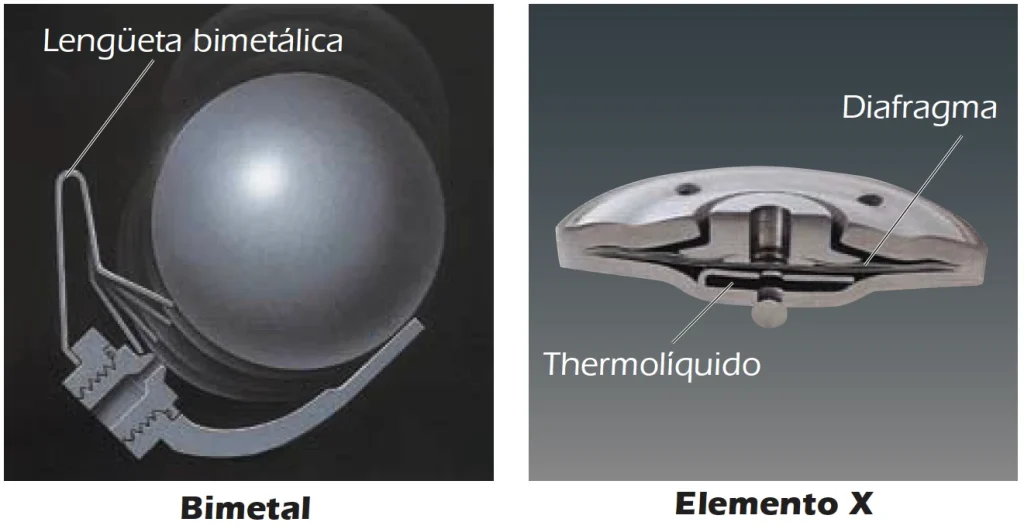
The JX, JH-X, SJFX, and SJHX series feature a balanced-pressure X thermostatic element for improved air venting. Other models use a bimetal venting system.
Easy Maintenance
TLV Free Float® closed float traps, with the exception of SS3 and SS5 models which require no maintenance, can be serviced without being removed from the line.
Operation (X Element)
1. Start-up
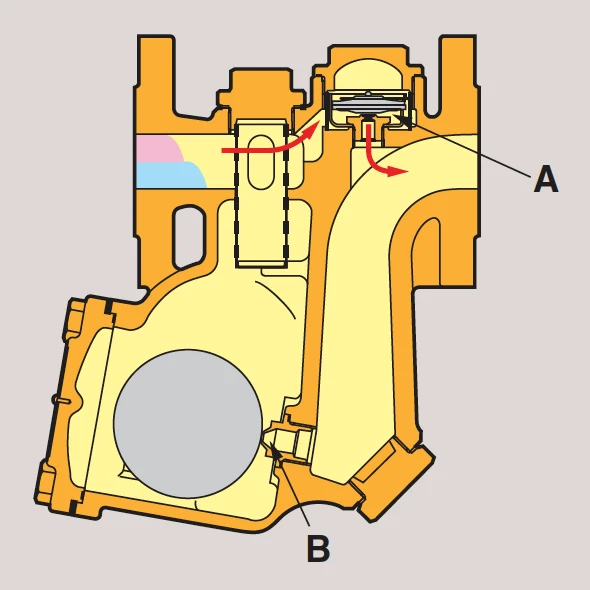
Initially, the trap is cold, and the thermostatic capsule (X element) contracts, opening orifice A to allow air to escape. When cold condensate arrives, the float rises, allowing condensate to exit through orifice B, while both air and condensate pass through orifice A.
2. Hot Condensate Discharge in Free Float®
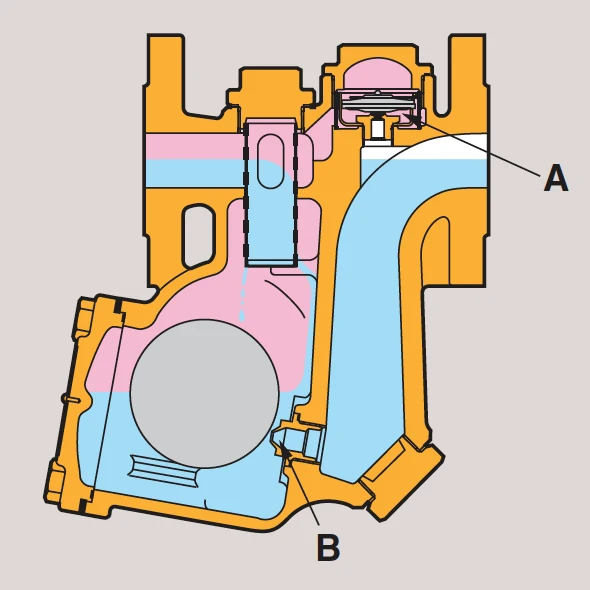
After the air and cold condensate have been discharged, the entry of hot condensate expands the X element, closing orifice A before steam arrives. The condensate continues to discharge through orifice B.
3. Quick Response
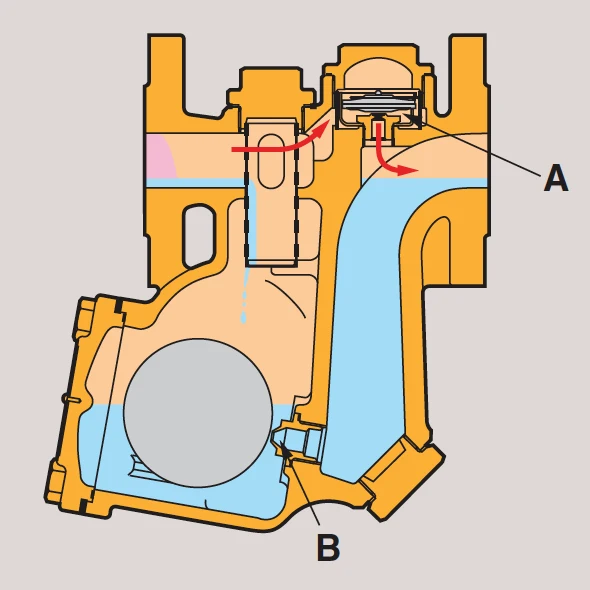
Air or cold condensate entering the Free Float® trap lowers the temperature of the X element, causing it to contract. This opens passage A, allowing air or condensate to be discharged. When hotter condensate arrives, the X element expands and closes passage A.
4. Complete Tightness of Free Float®
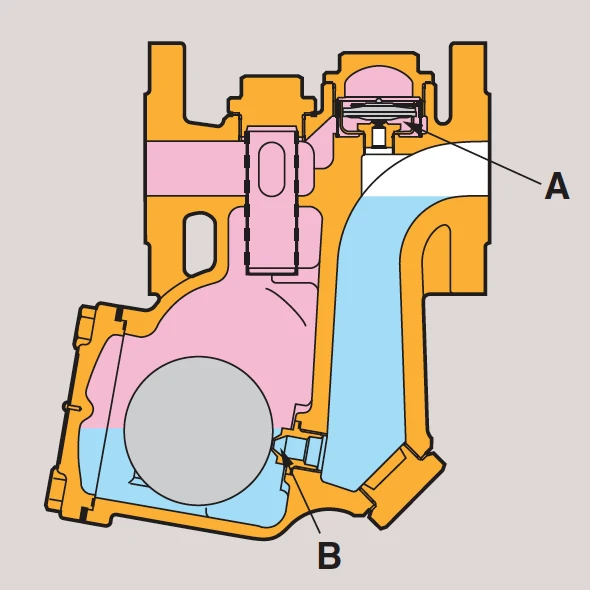
When the condensate flow stops, the Free Float® trap closes orifice B, which is always below the condensate level. The upper part of the trap fills with steam, and the X element closes orifice A. The trap is completely sealed, preventing any steam leakage.
Here is a video demonstration of how the Free Float® operates: